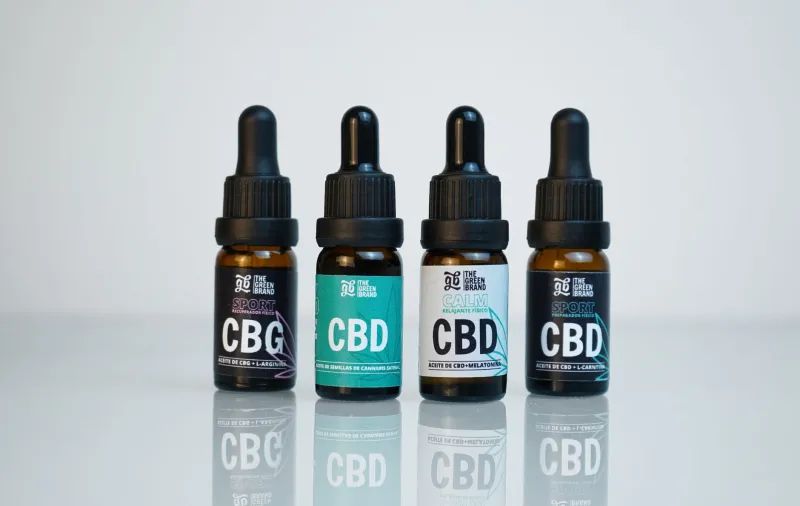
Paper Trails, Not Promises: Reading the UK CBD Novel Foods List Calmly
Photo: Elsa Olofsson, CC BY 2.0, via Wikimedia Commons
There is a particular kind of reassurance that arrives when you find a brand on a government list. It feels tidy. It feels official. It feels like someone, somewhere, has already done the thinking for you.
With CBD, that feeling is understandable. The shelves are busy, the labels are confident, and the language around regulation can be foggy. The UK’s public list of CBD novel food applications is one of the few fixed points a shopper can look for. But it is worth being precise about what that fixed point actually is. It is a paper trail, not a promise.
As of November 2026, the list remains a useful starting point. It should not be the finish line.
What the list is actually for
In the UK, CBD used in food and food supplements is treated as a novel food. That means it needs pre-market authorisation before it can be sold. Because the CBD market was already trading before the rules were fully settled, the Food Standards Agency set up a route allowing certain products to remain on sale while their applications work through the system. The public list is part of that route.
An entry generally tells you that a product, brand or range has been linked to a novel food application that has met the initial requirements to appear on the list. It is an administrative marker. It says there is a regulatory process in motion. It does not say the process is complete, and it does not say the product has been approved in the way a medicine is approved.
That distinction matters. ‘On the list’ is not the same as ‘authorised’. It is not the same as ‘tested’. And it is certainly not the same as ‘right for you’.
What an entry does not prove
A listing does not prove that the oil in your hand is potent, pure or accurately labelled. It does not prove that the batch has been checked for contaminants, heavy metals or THC levels. It does not prove that the product is organic, UK-grown, lab-verified or made to any particular standard beyond the basics of the application.
It also may not prove that the exact bottle in your kitchen cupboard is covered. Listings are often tied to a brand and a product range rather than a single size, flavour or batch. A company may have one entry while selling several variations. Some may be covered; some may not. The only sensible way to read the list is with the product name, brand and range in front of you, and with a willingness to ask which entry applies.
What a missing entry might mean
A missing entry is not, by itself, proof that a product is unsafe. It is a prompt to ask questions.
It could mean the product is new and the paperwork is still in progress. It could mean the brand is selling a variation that is not covered by its existing entry. It could mean the retailer is working from old stock, or that the listing is under a different company name. It could also mean the product should not be on sale. Those possibilities are very different, and only the seller can clarify which one applies.
What is worth treating with caution is a confident claim that a product is ‘FSA approved’ when no entry can be found or explained. That is not calm shopping; that is letting a phrase do work it cannot do.
A practical five-minute check
Start with the exact product details: brand, product name, size, flavour and any range name. Then go to the FSA’s public list directly rather than relying on a screenshot on a retailer’s website. Search the brand and the product name. Read the entry carefully. If the wording is broad, ask the retailer which listing covers the item you are buying.
Next, look for a batch number and a lab report. The batch number ties the bottle to a specific production run. The lab report, often called a certificate of analysis, should show what was tested and when. It is not a magic document either, but it tells you more about the actual contents than a regulatory listing ever can.
The final step is the simplest: notice how the seller responds. A clear answer is reassuring. A vague answer is useful information too.
Where batch information comes in
The public list answers a regulatory question: is there a novel food application attached to this product or range? Batch information answers a different question: what is in this specific bottle?
Those two questions sit side by side. One does not replace the other. A product can have a listing and a poor batch report. A product can have a good batch report and a confusing listing. The mature shopper does not ask for one perfect document. They gather a few pieces of evidence and see whether they fit together.
Look for the batch code on the bottle, the date of the report, the cannabinoid profile and the contaminants tested. If the report is undated, generic or impossible to match to your bottle, treat it as a starting point for a question rather than a reason to relax.
The false comfort trap
There is a quieter risk with lists like this: they can stop us thinking. A shopper sees a brand name, feels reassured and stops asking about dose, label clarity, batch testing or whether CBD is even the right choice for them.
That is false comfort. Regulation is not a personality. A listing does not make a product suitable for everyone, and it does not turn a supplement into a treatment. CBD is not a medicine, and a place on a public list should never be read as medical approval or a cure for anything.
Equally, a missing entry should not send anyone into a spiral. The useful response is not panic. It is a calm email or a quiet question at the counter.
How to ask without a row
A short, specific message works best: ‘Could you confirm which entry on the FSA public list covers this product, and could you share the batch certificate of analysis for the bottle I have?’ That is not aggressive. It is just clear.
If the retailer can answer, you learn something. If they cannot, you have learned something else. Either way, you are using the list as one part of the paper trail rather than treating it as a rubber stamp.
The House of Canna view is straightforward: read the list, read the batch report, read the label, and keep your expectations proportionate. A public list is useful evidence. It is not the whole story, and it was never meant to be.