The Saturday Shuffle: CBD, Sore Calves and the Recovery Claims Worth Slowing Down For

Photo: That Guy Who's Going Places, CC BY 2.0, via Wikimedia Commons
There is a particular Saturday morning rhythm in Britain. A park fills with people in slightly optimistic running shoes, someone is doing lunges beside a bin, and a volunteer in a high-vis jacket is explaining the course for the fourth time. Afterwards, before the coffee queue has properly formed, the conversation turns to calves, knees and that familiar question: what actually helps with recovery?
It is no surprise that CBD products have drifted into this world. Small bottles appear in gym bags, balms get passed around at running clubs, and online shops speak confidently about soreness, recovery and the body’s response to exercise. Some of it is useful information. Some of it is marketing running considerably faster than the evidence.
What CBD is, and what it is not
CBD, or cannabidiol, is one of the cannabinoids found in cannabis and hemp. In the UK it is sold in oils, capsules, balms and other formats, usually as a food supplement or cosmetic rather than a medicine. It is not licensed to treat pain, inflammation or muscle recovery, and UK rules do not allow claims that it can prevent or cure illness.
That does not mean people do not use it. Many adults try CBD for general wellbeing, relaxation or as part of a personal routine. But when it comes to exercise recovery, the honest position is modest: the evidence is limited, mixed and not strong enough to justify the sort of promises sometimes printed on a tub. CBD is not a replacement for sleep, food, hydration or sensible training. If your hamstring is unhappy, a bottle is not a physiotherapist.
Balms versus oils: two very different habits
A topical balm is applied to the skin. In the UK, leave-on skin products are generally regulated as cosmetics, which means they are about appearance and odour rather than treating or preventing disease. A balm may feel soothing because of the massage, the scent or the cooling sensation. That experience can be pleasant and entirely valid. It is just not the same as evidence that CBD has repaired muscle tissue.
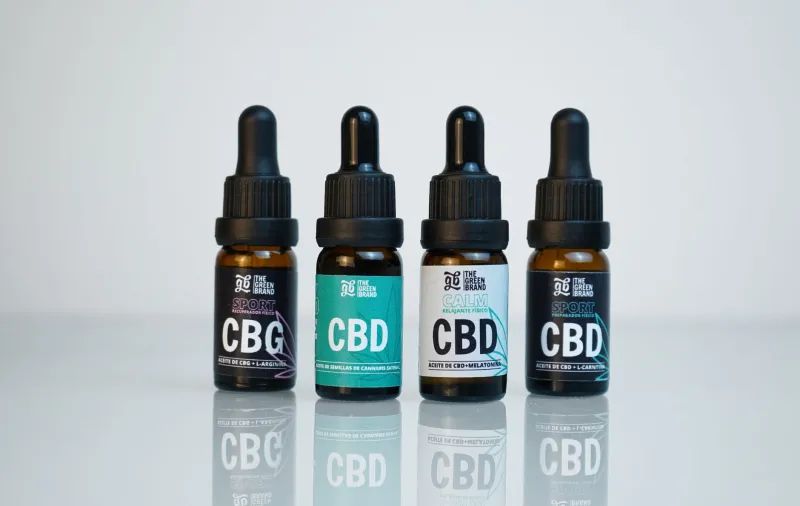
Oils and capsules are swallowed. These tend to be sold as food supplements, and the label should tell you how much CBD is in the bottle and, ideally, per drop or serving. This is where shoppers get caught out: a bottle may say 1,000mg, but that is the total across the whole bottle, not a single dose. A dropper may hold far less. Read the serving information before assuming you know what you are taking.
For runners, the practical difference matters. A balm is a local, sensory habit. An oil is something you ingest, which means timing, dose and personal tolerance deserve more thought. Neither is a magic recovery switch.
The anti-doping bit amateur athletes should not skip
Most Saturday 5K runners are not elite athletes, but plenty of people belong to clubs, enter races or compete under national governing body rules. That is worth pausing over. The World Anti-Doping Agency does not prohibit CBD itself, but THC and other cannabinoids remain prohibited in-competition. A CBD product that contains THC, or is contaminated with it, could create a problem.
UK Anti-Doping advises athletes to check products carefully and to consider the risks of supplements, including CBD. If you compete, the safest approach is to check the current rules for your sport and ask the governing body or UKAD directly rather than relying on a gym-bag recommendation. Lab reports and clear THC declarations help, but they are not a guarantee against every batch variation. For amateur athletes, especially those in tested sport, caution is not paranoia. It is just admin with consequences.
Timing: less ritual, more common sense
There is a lot of online chatter about taking CBD before exercise, after exercise, with food, without food, or at precisely the right moment in some imagined recovery window. For most recreational runners, there is no robust evidence that a specific CBD timetable improves recovery. If you already use an oil and get on with it, the main things are consistency, a sensible dose and knowing how it affects you.
Some people prefer not to try anything new immediately before a hard session or a race. That is reasonable. Novelty is not a recovery strategy. If you are using a balm, apply it when it feels comfortable and follow the label. If you are using an oil, start low, keep a note of what you took and when, and avoid stacking it with alcohol or other substances without thinking. And if you are unsure because of medication, pregnancy, health conditions or upcoming surgery, speak to a pharmacist or GP rather than a forum thread.
How to read the label without turning a 5K into a pharmacology exam
You do not need a science degree to shop well, but a few checks go a long way. Look for the amount of CBD per serving, not just the headline total. Check whether the product is isolate, broad-spectrum or full-spectrum, and whether THC is declared. Look for a batch-specific lab report, sometimes called a certificate of analysis. A clear UK supplier should be willing to show it.
Be wary of claims that sound like medicine in disguise: fixes soreness, speeds repair, reduces inflammation, guaranteed recovery. Those are red flags. Also be sceptical of enormous mg numbers without serving detail, or prices so low that testing and quality become hard to imagine. The House of Canna has written before about bargain bottles, and the principle holds here: someone has to pay for the lab work.
The finish line
CBD can be part of a calm, adult wellness routine. It can sit alongside a post-run stretch, a decent breakfast and a quiet walk home. What it should not do is crowd out the basics or convince you that recovery is a product you can buy in a bottle. The Saturday shuffle is mostly about turning up, moving within your limits and looking after yourself afterwards. If a small bottle helps you build that habit, fine. Just keep the claims the right size.
This article is general information, not medical or anti-doping advice. Check current UK guidance and your sport’s rules if you compete.