Nine-to-Five, Calmly: CBD at Work Without the Overshare

Photo: Tyne & Wear Archives & Museums, No restrictions, via Wikimedia Commons
The 8:42 train is late, the shared calendar has grown teeth, and someone has put a spreadsheet where a conversation used to be. For plenty of UK workers, CBD has become one of the small, quiet things people try when the day feels loud. Yet the workplace is not the sofa. Using CBD at work is less about chasing a trend and more about fitting a modest, legal product into a day that already has rules, roles and responsibilities.
Start With the Role, Not the Routine
Before you think about timing or storage, look at what your job actually asks of you. A desk-based role in an open-plan office is a different context from driving a van, operating a forklift, working at height or managing machinery on a production line. Safety-sensitive roles come with a higher bar, and 'it is only CBD' is not a risk assessment.
If your work is regulated, read your employer's drug and alcohol policy before you read any product label. Some policies are strict about any substance that could affect alertness; others are silent on food supplements. Silence is not permission. If you drive for work, remember that UK driving law is about fitness to drive. Do not get behind the wheel if you feel impaired, and do not assume a CBD product is irrelevant to a roadside test simply because it is sold on the high street. Full-spectrum products can contain trace cannabinoids, and labels vary. If in doubt, leave it until you are home.
The Policy Question Is Usually an HR Question
Most workplaces do not have a line in the handbook saying 'CBD: yes' or 'CBD: no'. That can make the disclosure dilemma feel bigger than it is. You are not obliged to announce a supplement at the kettle. Privacy is reasonable. But if your role is safety-sensitive, if your employer carries out testing, or if you are using CBD alongside prescription medication, a quiet word with occupational health or HR is usually better than guesswork.
Keep the conversation practical: what you use, how much, when, and whether it affects your work. You do not need to sell anyone on CBD. You just need to be clear that you are fit for duty. If your employer asks you to stop, follow that instruction and seek advice. A calm workplace is built on consent and clarity, not on a dropped bottle in a shared kitchen.
Discreet Storage That Does Not Look Like a Secret
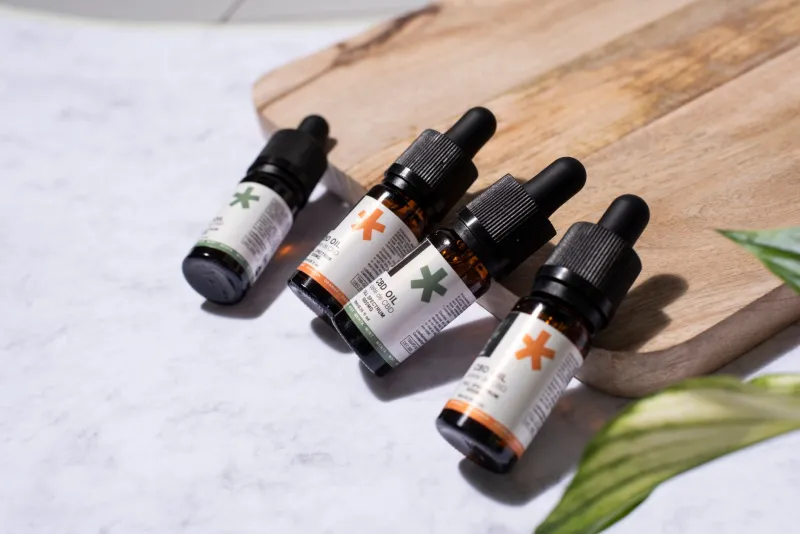
Discretion is not the same as secrecy. Keep your product in its original, labelled packaging so you can check the batch, dose and ingredients. A locked drawer or a closed pouch in your bag is fine. Decanting oil into an unmarked dropper bottle is not. It makes a legal product look suspicious and makes it harder to answer questions if someone finds it.
Keep CBD away from shared food, the office fridge and anywhere children or pets might reach. If you travel between sites, carry only what you need for the day and keep it labelled. Do not share drops or edibles with colleagues. Dosage is personal, and what suits you may not suit someone else, especially if they take medication.
Timing: The Afternoon Dip, Not a Lunchtime Trend
CBD is not a light switch. It does not usually deliver a neat, immediate reset between meetings. If you use it during the working day, think consistency and restraint rather than topping up because the 3pm slump has arrived. Start with a low dose, follow the product instructions, and note how you feel. A small amount after lunch is not a personality; it is a personal choice.
The bigger risk is treating CBD like a lunchtime trend: buying the loudest product, taking it at the busiest moment and expecting it to fix a workload problem. It will not. If your afternoons are chaotic, the first fixes are usually boring ones: a proper break, water, food, a walk around the block, and a realistic to-do list. CBD can sit alongside those habits, not replace them.
The Commute Home and the Machinery Rule
The end of the working day is where careful use matters most. If you use CBD at lunchtime, do not assume you are fine to drive home simply because you feel normal. Check the label, consider the product type, and be honest with yourself about alertness. The same applies to machinery, tools and any task where a moment of distraction has consequences.
Medication interactions deserve a proper mention. CBD can interact with some prescription medicines, including certain epilepsy drugs, blood thinners and medicines processed by the liver. This is not a reason to panic; it is a reason to ask a pharmacist or GP if you take regular medication. If you are pregnant, breastfeeding, under 18 or managing a health condition, get advice before using CBD. This article is general information, not medical advice.
A Calm Workplace Test
Before CBD becomes part of your working week, run a short, honest check. Does your role involve driving, machinery or safety-critical decisions? Have you read the policy? Is the product clearly labelled with CBD content and batch information? Can you store it discreetly and safely? Are you using it to support calm habits, or to paper over a schedule that needs changing?
If the answers are sensible, CBD can remain a small, private part of the day. If they are not, wait. The most credible workplace wellness choice is not the one you can justify in a hurry. It is the one you can explain calmly, or decide not to use at all.