Careful Words on the Counter: Decoding UK CBD Retail Claims in 2026

Photo: Chris Whippet , CC BY-SA 2.0, via Wikimedia Commons
The hush is not an accident
Walk into a UK CBD shop and you may notice a particular tone. The assistant says 'wellness' rather than 'treatment'. The label talks about 'balance' and 'routine'. The website has a lot of asterisks. This is not because everyone in the industry is naturally vague. It is because CBD retail sits in a crowded regulatory space, and the wrong sentence can turn a shop into a case study.
In 2026, the gap between what customers want to ask and what retailers can safely say is still wide. Understanding that gap makes you a better shopper.
Who sets the rules?
Three names come up again and again: the Advertising Standards Authority, which enforces the CAP Code; the Medicines and Healthcare products Regulatory Agency, which polices medicinal claims; and the Food Standards Agency, which oversees CBD as a novel food. There are others, including local trading standards, but those three explain most of the careful language you hear.
The CAP Code requires ads to be legal, decent, honest and truthful. Medicinal claims, meaning saying or implying that a product treats, prevents or cures a condition, generally require a medicine licence. CBD products sold as food supplements are not medicines. They must also comply with novel food rules, which is why reputable sellers talk about the FSA register and batch documentation rather than miracle results.
What a CBD shop can say
A compliant retailer can tell you what the product is, what is in it, how much CBD it contains per dose, and what the label says. They can explain the difference between CBD and THC. They can show you a batch lab report. They can talk about formats such as oil, capsules, balm and tea, and about taste, texture and packaging. They can remind you to read the label and speak to a healthcare professional if you take medication.
They can also say that CBD is a food supplement, not a medicine. That sentence may sound dull, but it is doing a lot of work.
What it cannot say
What you should not hear is that a product treats anxiety, cures insomnia, beats pain or balances your endocannabinoid system in a way that implies medical benefit. Phrases like 'clinically proven', 'medical grade', 'prescription strength' and 'miracle' are red flags. So are guarantees, such as 'you will sleep better', and claims that a product has no side effects. Even 'THC-free' needs care, because trace levels are possible and the law sets limits rather than a promise of absolute zero.
The rules also bite on implied claims. A before-and-after photo, a white coat, a stethoscope or a testimonial that says a condition improved can all suggest a medicinal benefit without saying it outright. The ASA has been clear that implication counts.
Why staff sound like they are in a spy film
Shop assistants are often trained to stay within the lines. They may have been told not to discuss symptoms, not to recommend a dose for a condition, and not to repeat customer stories as if they were evidence. That can make them sound evasive, but it is usually risk management rather than secrecy.
The trouble is that the hush can leave customers guessing. If no one can say much, the loudest voices fill the gap: flashy websites, social media sellers, the person in the pub. That is why it helps to know what good looks like.
How to ask better questions
Do not ask, 'What will this cure?' Ask, 'What does the label say?' Do not ask, 'Is this the strongest?' Ask, 'How much CBD is in each dose?' Do not ask, 'Is it medical grade?' Ask, 'Is this a food supplement or a medicine, and where is the batch report?'
Useful questions include:
- What is the CBD content per dose, and how does that compare with the label?
- What is the THC level, and can I see the batch lab report?
- Is the product on the FSA novel foods register?
- What warnings are on the label?
- Are there ingredients I should know about?
- What can you legally tell me about this product?
A good retailer will answer the factual ones without flinching. A bad one will pivot to a story about their cousin's bad knee.
The label is the script
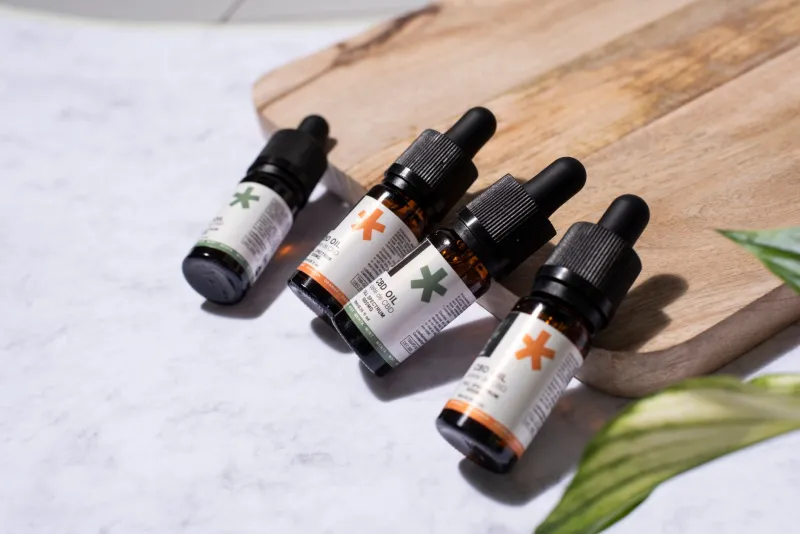
The front of the pack is marketing. The back is information. Look for the CBD content, the THC level if stated, the ingredients, the batch number, the recommended dose and the warnings. Look for a QR code or a lab report. If the label is vague about how much CBD you are actually getting, that is not a personality quirk. It is a problem.
At The House of Canna, we would rather see a boring label with clear numbers than a poetic one with no data. The same goes for shop conversations. You are not being difficult by asking for the batch report. You are doing the job the hush leaves undone.
The hush, decoded
Careful language is not automatically bad. In a regulated market, it can be a sign that a retailer knows the rules. The warning sign is not caution; it is confusion. If a shop cannot tell you what is in the bottle, cannot show you a lab report, or keeps hinting at miracles while refusing to use plain words, walk away.
You do not need a miracle. You need a product that is clearly labelled, legally sold and honestly described. In 2026, that is still the best filter we have.