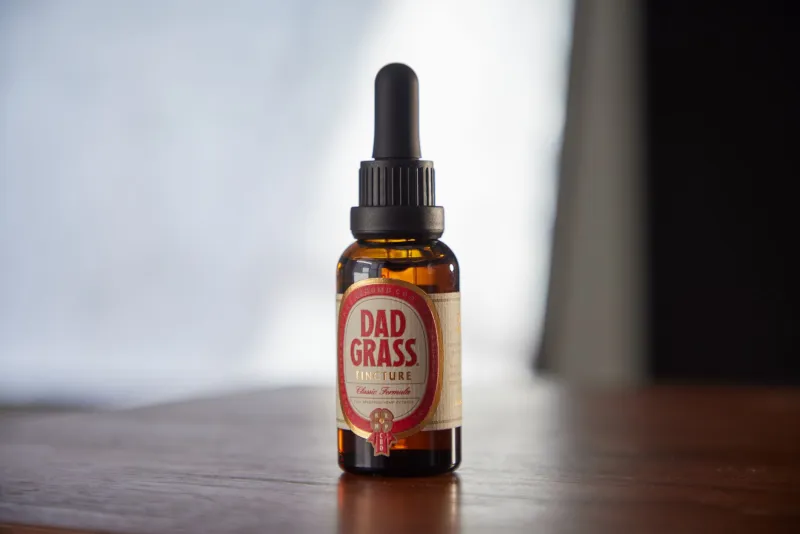
Curious Noses and Child-Proof Lids: Living With Human CBD and a Pet in the House

Photo by Photo by X F on Unsplash on Unsplash
It usually happens in the kitchen. You turn your back for the length of a kettle boil and something small and plastic is being investigated with real enthusiasm under the table. Dogs are optimists. Cats are investigators. Neither of them can read a label.
So let's talk about human CBD products living alongside animals — not as a scare story, but as a housekeeping conversation. Most of this is storage, labelling and knowing who to ring.
Your oil is not their oil
It's tempting to think a product made for humans is 'gentler' at pet scale. It isn't, and the dose is the least of it.
Human CBD oils are formulated and dosed for an adult human body. A single drop can carry a meaningful amount, and a dog or cat weighing a fraction of that is not simply a smaller version of you. Many oils use an MCT (medium-chain triglyceride) carrier, which is rich and can upset a small animal's stomach in decent quantities. Some products are flavoured, and flavourings are exactly what makes a bottle interesting to a nose on the floor. Edibles bring their own hazards entirely: chocolate is toxic to dogs, raisins and sultanas can cause serious kidney injury, and xylitol — common in sugar-free sweets and some gummies — is a genuine veterinary emergency.
And while UK CBD products are subject to legal THC limits, a trace amount that is negligible for an adult is not negligible for a five-kilogram dog.
Human CBD is not a pet treat. It is not a calming chew. It is not a cheaper version of anything on the pet shelf.
What accidental ingestion can look like
Signs vary with the product, the amount and the animal, but owners and vets commonly describe wobbliness and unsteadiness on the legs, dribbling, vomiting, loose stools, dilated pupils, drowsiness or the opposite — restlessness and agitation — and sometimes dribbling urine or a lower body temperature. Tremors are possible in heavier exposures.
If there's chocolate, raisins, sultanas or xylitol in what was eaten, treat it as more urgent than the CBD question, because those can be serious quickly.
Don't wait to see how it develops. Ring your vet.
A ten-minute storage audit
This is the bit that stops the phone call happening at all.
- Height, not habit. Store CBD in a high cupboard, not a bedside drawer, handbag, coat pocket or the shelf by the door. Bags and coats are where curious pets do their best work.
- Keep the original bottle. The label, strength, batch number and ingredients are the things a vet will ask for. Decanting into an unmarked bottle is a bad trade for tidiness.
- Use a lockable box. A small tin with a clip lid, or a box with a catch, is enough for most households.
- Count your edibles. Loose gummies rattling around in a bag are an invitation. Keep them in the container, in the box, up high.
- Clean up spills properly. A dropped drop on the floor is a sniff away from being eaten.
- Mind the guests. At Christmas, handbags multiply. Ask visitors to keep bags zipped and off the floor if your dog is the type to rummage.
Calling the vet without the panic
If something has been eaten, ring your vet practice straight away and say clearly: 'I think my dog has eaten a CBD product.' Have these to hand if you can — product name, strength in milligrams, how much is missing, roughly when it happened, your pet's weight, and any symptoms you've noticed.
If your own practice is closed, emergency cover will be signposted on their voicemail. In the UK, Animal PoisonLine (run by Vets Now) can be reached on 01202 509000; it's a charged service aimed at owners whose animals may have been poisoned, and they'll advise whether you need to be seen.
Two things not to do: don't induce vomiting unless a vet tells you to, and don't wait for symptoms to 'develop properly' before making the call. Bring the packaging with you if you're asked to come in.
Asking good questions about the pet-CBD shelf
The UK pet-CBD market has grown quickly, and the labelling doesn't always help. Veterinary medicines in the UK are regulated by the Veterinary Medicines Directorate, and CBD is not an authorised veterinary medicine — which is why so much of what's sold sits in a greyish space as supplements or feed, with language that leans on 'calm' and 'support' rather than anything clinical.
None of that is a reason to panic. It is a reason to be a specific question-asker:
- Ask your vet about interactions before adding anything, especially if your pet takes medication for epilepsy, pain, the heart or the liver.
- Ask what evidence exists for the product and the species in front of you. Cats and dogs are not interchangeable, and neither are their dose ranges.
- Ask who made it, what's in it and whether there's a batch-specific lab report.
- Be wary of anything sold with a condition in its name, or a promise attached to it. A label is not a diagnosis.
Your vet knows your animal's history, weight and medication. A website does not.
A calmer house, quietly
The aim here isn't fear. It's a shelf that's a bit higher, a box that clicks shut, a phone number saved in your contacts and a vet who already knows what's in your cupboard.
Keep your CBD for you, keep the pets' things for them, and keep the two separated by a metre of height and a lid that shuts properly. That's the whole trick.