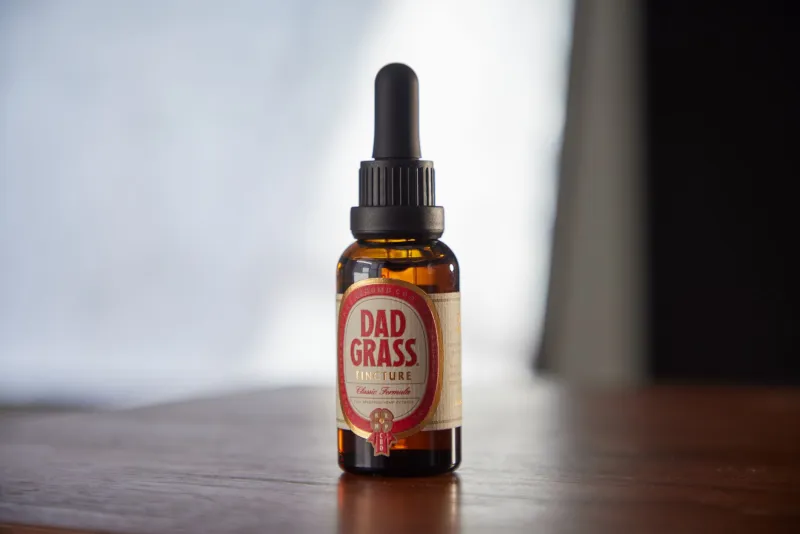
The First Fortnight: A Beginner’s Plan for Starting CBD Without Guesswork
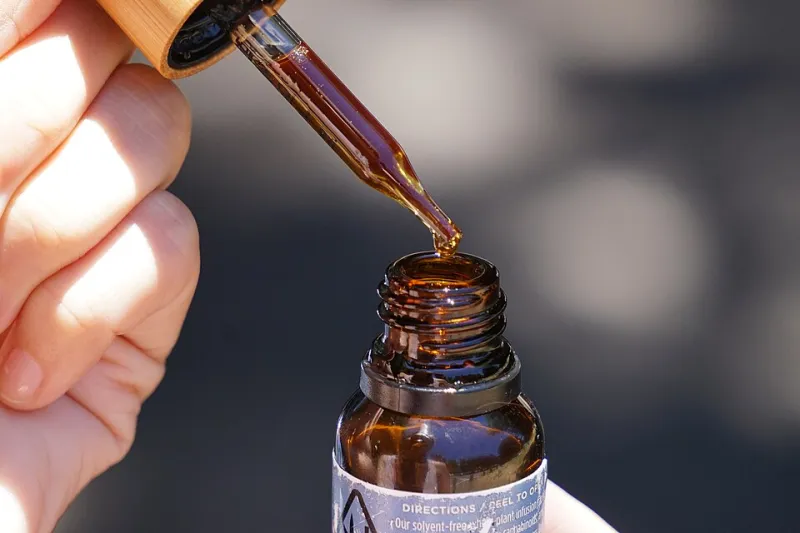
Photo: elsaolofsson, CC BY 2.0, via Wikimedia Commons
There’s a particular habit that tends to appear around week one of CBD ownership. You hold the pipette over the bottle, squeeze, watch a droplet form, and then — because the label said something about milligrams and the internet said something else entirely — you gently release half of it back. Then you take the other half and wonder whether that counted.
Call it the half-drop habit. It’s not silly, and it’s not a sign you’ve bought the wrong thing. It’s what happens when a product arrives with numbers on it and no obvious instructions for a human being standing in a kitchen at 8pm.
So rather than treating your first bottle as a puzzle to solve in one go, treat your first fortnight as a short, low-stakes observation period. You are not chasing a target. You are collecting information.
Why someone else’s routine is a poor starting point
CBD products vary enormously. A bottle that suits your neighbour — same brand, same flavour, possibly even the same shelf in the same shop — may be a different strength from the one in your hand. Body weight, what else you’re taking, how your sleep has been, and how much you’ve eaten that evening all sit in the background too. Copying a friend’s number is a bit like borrowing their prescription glasses: well-meant, rarely helpful.
There’s also the small matter of language. People say “I take ten drops” the way they say “I take one vitamin”, but ten drops of a 500mg bottle is a very different proposition from ten drops of a 1,000mg one. Drops are a unit of volume. Milligrams are a unit of CBD. Confusing the two is the single most common reason a first experience feels unpredictable.
Read the label like a map, not a marketing line
Before you open the bottle, do three small bits of arithmetic. It takes about a minute and saves a great deal of squinting.
First, find the total CBD in the bottle — usually a number in milligrams on the front, such as 500mg or 1,000mg. Second, find the volume, typically 10ml or 30ml. Third, find the suggested serving on the back, which may be expressed in drops or millilitres.
Now divide. A 10ml bottle containing 500mg works out at roughly 50mg of CBD per millilitre. If your pipette delivers around 20 drops per millilitre — a common figure, though not a universal one — that’s approximately 2.5mg per drop. The same maths on a 1,000mg 10ml bottle gives you about 5mg per drop. Suddenly the gap between “a few drops” and “a few drops” comes into focus.
Two caveats worth keeping in your back pocket. Drop size varies by pipette, and thicker oils can produce plumper drops than thin ones. If your bottle has a graduated pipette with markings, trust the markings over your counting. And if the label gives you nothing but vibes and a leaf motif, that’s a reason to look elsewhere — a UK-sold product should tell you its CBD content clearly, and a batch lab report should be available on request.
A cautious starting point, in plain terms
Product education tends to circle the same phrase — start low, go slow — and it has survived this long because it works. A common cautious approach is to begin with a small amount, once a day, and hold it steady for several days before changing anything. For some people that means a couple of drops of a moderate-strength oil; for a very strong bottle, it might be a single drop.
The important part isn’t the exact number. It’s the holding steady. Changing your amount every evening tells you nothing except that you’re changing your amount every evening. Give each step four or five days, and you’ll start to see a pattern rather than a fog.
A few practical notes. Take it at roughly the same time each day, so the comparison is fair. Many people hold the oil under the tongue for a minute or two before swallowing, though swallowing it straight is also fine — it just tends to arrive more slowly. And if you’re using a product with any trace of THC, keep it well out of reach of children and pets, and don’t share it around the dinner table.
Two weeks, one notebook
You don’t need an app. A notes page on your phone or the back of an envelope will do. Each day, jot down four things: the time, how many drops and roughly how many milligrams, anything you ate around then, and one word for how the evening or night went.
That’s it. Thirty seconds. After a fortnight you’ll have something most people never build: a small, honest record of what you actually did and what actually happened. It’s far more useful than a forum thread, and it gives you something concrete to bring to a pharmacist or GP if you decide to ask for advice.
What “working” might look like — and what it won’t
Set your expectations somewhere between curious and unbothered. CBD is not a light switch, and the licensed medicines containing cannabinoids are a separate conversation from the wellness oils on UK shelves. Many people report subtle changes in how settled they feel in the evening. Others notice nothing at all in the first fortnight, which is not necessarily a failure — it may simply mean the starting point was, correctly, quite low.
What you’re looking for is a trend, not a moment. If you find yourself sleeping a little more evenly, or feeling less prickly at 11pm, that’s the sort of quiet signal a journal is designed to catch. If nothing shifts after a couple of steady weeks, that’s useful information too, and a good moment to talk it through rather than simply buying a stronger bottle.
When to pause and ask a professional
Some situations deserve a conversation rather than a pipette. If you take prescription medication — particularly anything for epilepsy, blood thinning, or with a narrow therapeutic window — speak to a pharmacist or your GP before starting, because CBD can affect how some medicines are processed. The same goes if you’re pregnant, breastfeeding, managing a long-term condition, or due to have surgery.
And if you feel unwell, jittery, unusually drowsy, or simply not yourself, stop and get advice. Don’t adjust prescribed medication on your own to make room for a supplement.
Retiring the half-drop habit
The half-drop habit comes from uncertainty, and uncertainty fades quickly once you have a number, a routine and a notebook. Choose one product, read its label properly, start smaller than you think you need to, and give it a fortnight before you form an opinion.
It’s a slower way to begin. It’s also the version you’re most likely to understand by the end of week two — which, for a first bottle, is really the whole point.